

Newcomers to the South are confronted with a lot of terms and ideas that may seem foreign to them. They may be sipping on a cold glass of sweet tea at a neighbors house and look up to see a porch ceiling painted blue and confuse the color with one known as “Carolina Blue” when it is actually “Haint Blue”
So just what is “Haint Blue” and where did this come from?
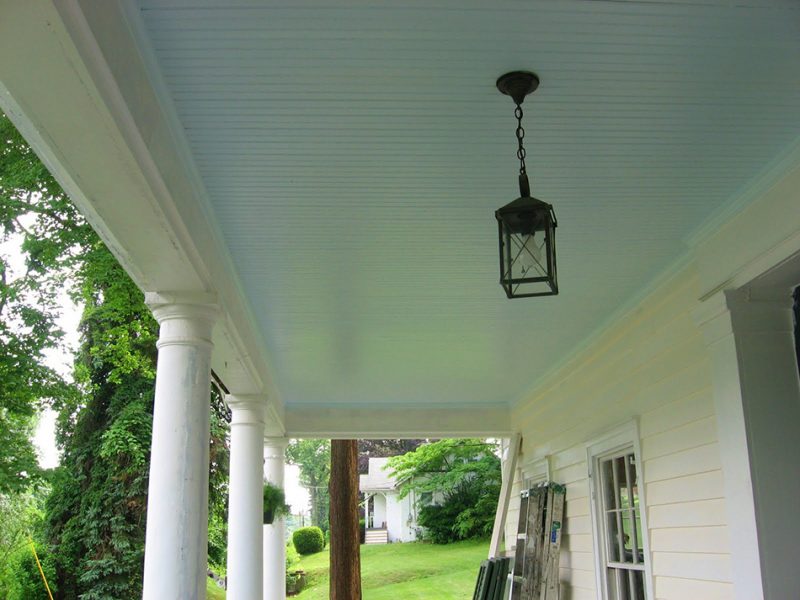
Haint blue is a soft blue-green that is traditionally used to paint porch ceilings in the Southern United States. The tradition originated with the Gullah in Georgia and the Carolinas but has also been adopted by White Southerners.
Indigo was a common source for haint blue prior to the American Revolution when indigo was a common crop for plantations in the American South, but the tradition survived well after the decline in indigo cultivation.
The word haint is an alternative spelling of haunt, which was historically used in African-American vernacular to refer to a ghost or, in the Hoodoo belief, a witch-like creature seeking to chase victims to their death by exhaustion.
The Purpose
Originally, haint blue was thought by the Gullah to ward haints, or ghosts, away from the home. The tactic was intended either to mimic the appearance of the sky, tricking the ghost into passing through, or to mimic the appearance of water, which ghosts traditionally could not cross.
The Gullah would paint not only the porch, but also doors, window frames, and shutters.
As Gullah culture mingled with White Southern culture, the custom became more widely practiced.
The use of haint blue has lost some of its superstitious significance, but modern proponents also cite the color as a spider and wasp-deterrent.
Though the color has not actually been scientifically shown to stave off bugs. However, there might be some genuine historical reason for this repellent phenomenon – when blue paints were first used on ceilings, they were usually ‘milk paints’ colored with a natural indigo dye/pigment. Milk paint is a composition of paint often mixed with lime/lye.
Today, lye is a known insect repellent (even indigo is said to be one too, though the added amount was likely negligible), which would explain why insects/spiders would avoid nesting on a painted porch ceiling or ledge. As milk paint has a tendency to fade over time, people would usually need to repaint quite often, covering the existing coat with a new coat of paint and refreshed lye resulted in continued replenished repellence.
Still, however, many will theorize that insects avoid the blue ceilings because they are “fooled” into thinking the blue paint is actually the sky.
Although ghosts and goblins might not be front-of-mind for modern homeowners, many continue the tradition of blue porch ceilings to keep ties to their home’s Southern roots.


